How to scale a recipe for more or fewer servings
The ingredient maths is simple; the useful checks are what those new amounts mean in your kitchen.
By The Scullery team · Written
To scale a recipe, divide the servings you want by the original servings, then multiply each ingredient quantity by that number. Keep units consistent while calculating. After the arithmetic, check your equipment and method: a larger quantity of ingredients doesn't come with an automatically correct new cooking time.
Work out the multiplier first
The calculation is:
Multiplier = new servings ÷ original servings
Suppose a four-serving recipe calls for 400 g chickpeas, 200 g tomatoes and 2 tablespoons of oil. For six servings, the multiplier is 6 ÷ 4 = 1.5. Your new amounts are:
- 600 g chickpeas;
- 300 g tomatoes;
- 3 tablespoons of oil.
For two servings, multiply the original amounts by 0.5 instead. Write down which serving count you're using before building the shopping list so you don't mix original and adjusted quantities.
The recipe's stated serving size remains a starting point. Decide whether it describes the kind of portion you want, especially if the dish will be part of a larger meal.
Keep the measurements understandable
Scale each component, including dressings and toppings, unless you deliberately want a different amount. Preserve distinctions such as drained weight and dry weight. They describe what was measured.
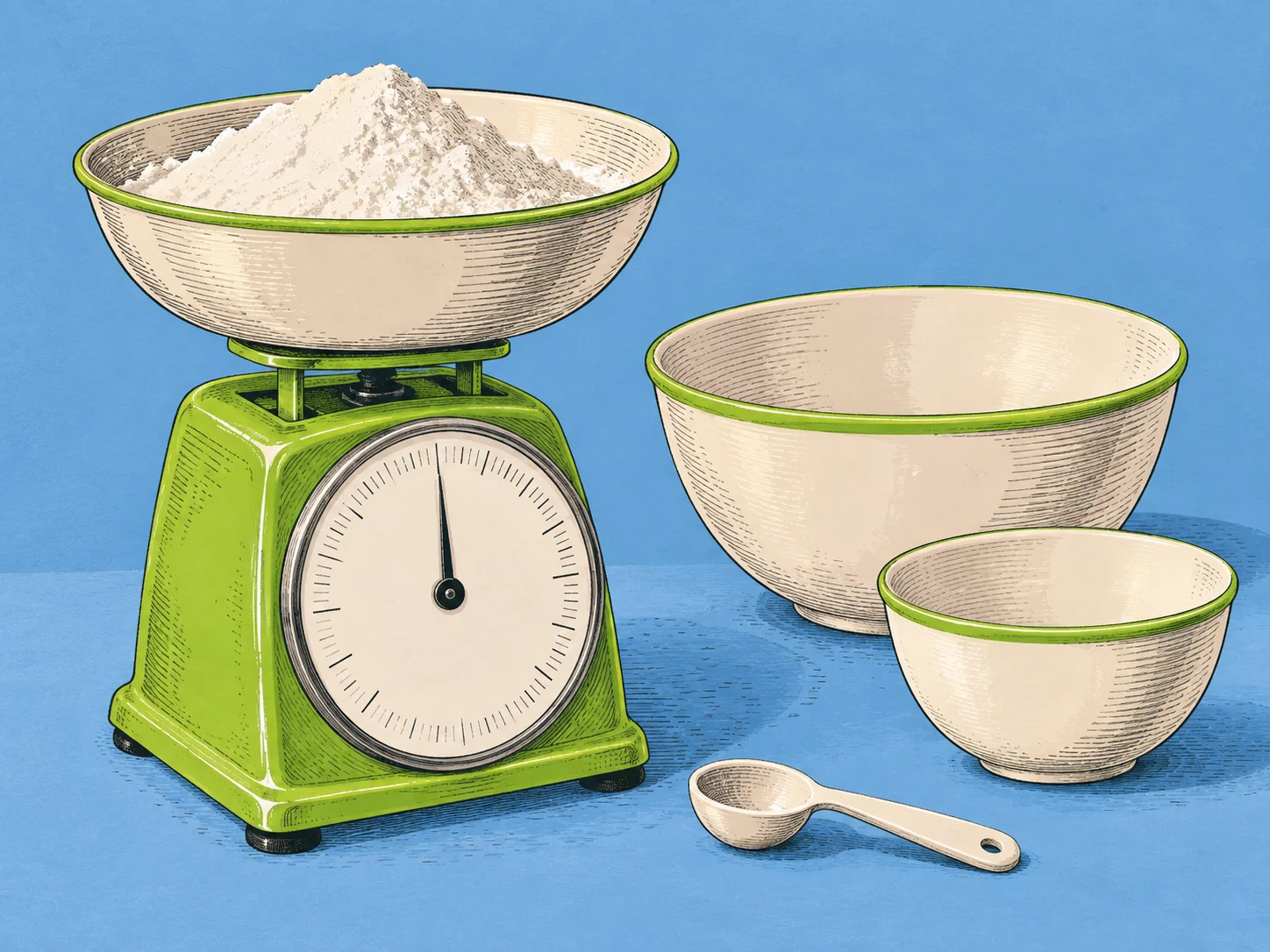
Weight can make awkward fractions easier to handle. If halving a recipe gives you half an egg, beat the egg and measure half its weight for that recipe. A cup of one ingredient isn't the same weight as a cup of another, so use the recipe's own weight measurements where available.
King Arthur's guide to kitchen scales explains why weighing is useful for consistent baking. Avoid rounding several small quantities at once and then expecting the original formula to behave identically.
Check the pan before increasing the batch
For a cake or traybake, look at the original pan dimensions, shape and batter depth. Pan capacity affects the bake; doubling ingredients doesn't mean a tin with twice the diameter. King Arthur's pan-size guide explains the effect of different sizes and materials.
For a first attempt, making the original recipe in separate suitable pans can be easier to reason about than one much deeper batch. Follow the recipe's doneness checks and avoid inventing a new time by multiplying the old one.
Read the method at the new quantity
Check whether your bowl, mixer or pan can handle the amount. Read references to divided ingredients and any quantities written inside the steps. Follow tested guidance for substantial baking changes, fermentation or preserving; simple serving arithmetic doesn't validate those processes.
In Scullery, a recipe's scale options (½, ×1, ×2 and ×4) adjust the ingredient amounts at once, and adding the recipe to the shopping list from its page uses the scaled amounts. For other serving counts, use the multiplier above. Review the quantities alongside the original method before cooking or adding ingredients to the shopping list.