How to halve a recipe, and what to do about the egg
Divide everything by two, then make three decisions the arithmetic can't: the egg, the small measures and the pan.
By The Scullery team · Written
To halve a recipe, divide every quantity by two. That part is easy. What the arithmetic can't do is decide what "2½ eggs" means at the hob, how to measure half a tablespoon, or what to do about a pan made for twice as much. Those three decisions are what this guide is for.
Halve everything, including the small things
Divide each ingredient, not just the main ones. The pinch of salt, the squeeze of lemon and the spoon of oil all halve too. If you're going to the shops, write the halved list before you leave so you don't buy for the original quantity by habit.
We make Scullery, and its recipes have a ½ option above the ingredients. Here is a frittata written for four, at half:
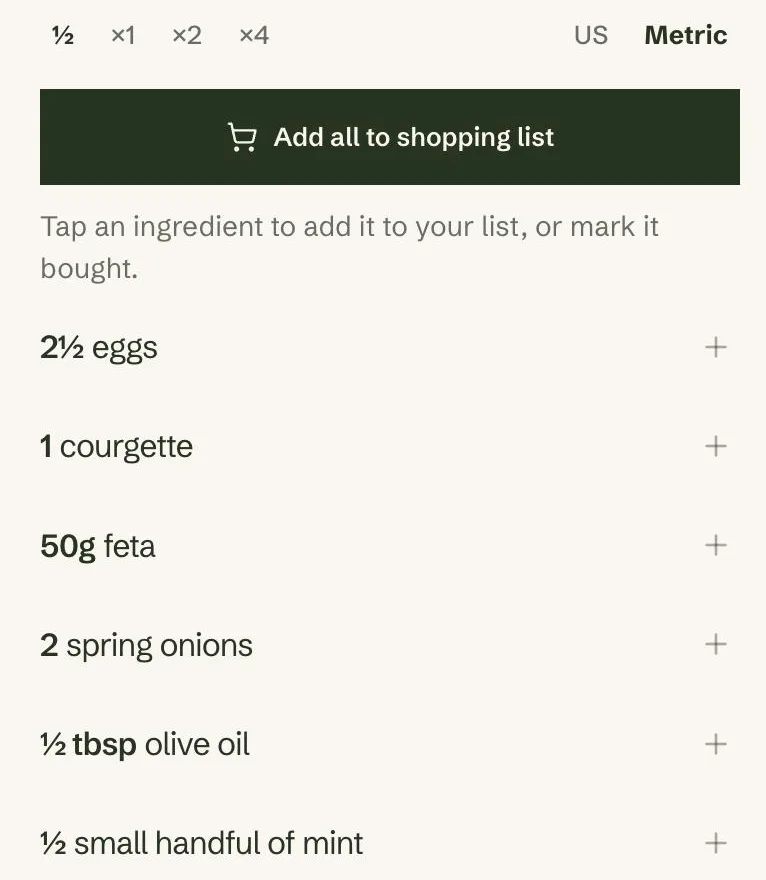
Scullery halves exactly and leaves the judgement to you, so the screen says 2½ eggs rather than rounding. Amounts in the method halve too when Scullery recognises them as ingredients; check any other numbers in the steps, such as a pan size, yourself. The rest of this guide is about what you do with that half.
What to do about the egg
UK eggs are sold by weight band. A medium egg weighs 53 g to just under 63 g, and a large one 63 g to just under 73 g, according to the British Egg Information Service. So half an egg is roughly 26 to 36 g, depending on the box.
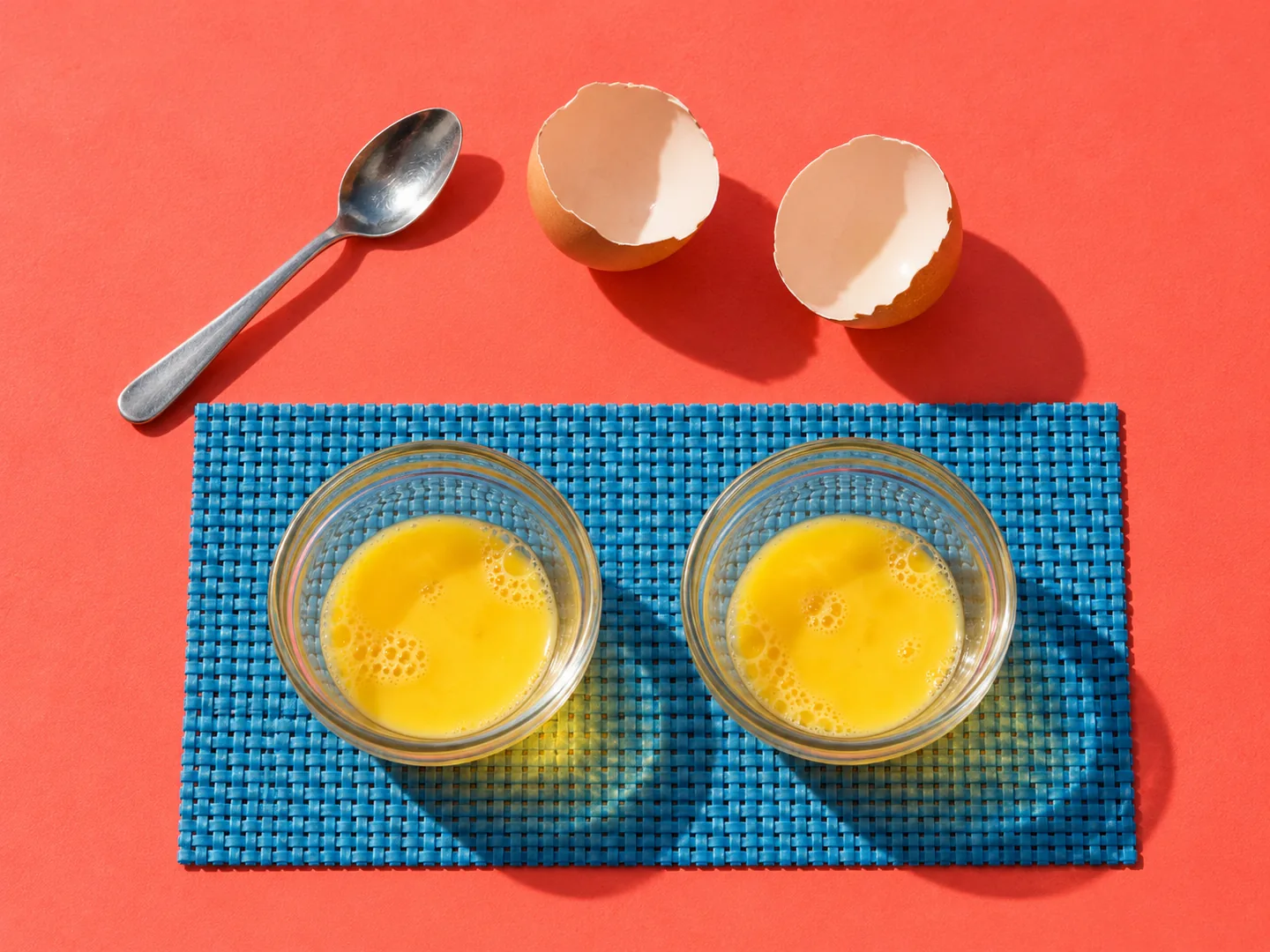
For cakes, batters and biscuits, beat the egg in a cup, put it on the scale and use half the weight. Baking relies on the ratio of egg to flour, and a whole extra egg can change the texture.
For forgiving dishes such as frittatas, omelettes, fried rice or scrambled eggs, round. For the frittata above, two large eggs or three small ones will do.
If a recipe uses yolks, two yolks become one. A single yolk is the awkward one: weigh it like a whole egg, or keep the whole yolk and accept a slightly richer result.
Cover the leftover half, keep it in the fridge and use it soon: scrambled eggs, an egg wash or tomorrow's omelette.
Small measures and the pan
Half a tablespoon is one and a half teaspoons. Half a teaspoon is easy; for a quarter, use a pinch or a measuring spoon set.
Halved food spread across the original pan is shallower and cooks faster. Use a smaller pan where you can, so the depth stays close to the original, and check the recipe's doneness signs early rather than halving the time.
For other multipliers, such as cooking for six from a recipe for four, see how to scale a recipe. If you halve most recipes because you cook for two, meal planning for two covers the shopping side.
Common questions
How do you halve a recipe with one egg?
Beat the egg, weigh it, and use half the weight. Cover the rest, chill it and use it soon in scrambled eggs or an egg wash. For forgiving dishes like omelettes, you can use a whole small egg instead.
How do you halve 3 eggs?
Half of three eggs is one and a half. Use one whole egg plus half of a second, beaten and weighed. In a frittata or a scramble, two eggs is usually close enough; in a cake, weigh.
Does halving a recipe halve the cooking time?
No. Time depends on the depth of food in the pan and the heat, not the quantity. Use the recipe's doneness signs and start checking a little earlier.
Can Scullery halve a recipe for me?
Yes. Choose ½ above a recipe's ingredients and the ingredient amounts halve, along with amounts in the method that Scullery recognises as ingredients. Adding the recipe to the shopping list from that page uses the halved amounts.